This post is not part of the 20 post which I was required to submit for my Strategic Management course, Though please do check out this video on Disruptive Innovation, it is the 1st video which is part of a series by Clayton Christensen.
Sunday, 4 September 2011

Saturday, 3 September 2011
The Automotive Industry and its Software dependance

The automotive industry faces more pressure to innovate than ever. Traditional markets in the industrialized nations are saturated with vehicles, and customer expectations for innovative functionality are no longer restricted to premium cars. Emerging markets are highly competitive and vehicle makers strive for a competitive edge while aggressively containing costs.Virtually every area of the vehicle faces emerging technologies that add to the cost and complexity of development. Hybrid electrical vehicles and fuel-cell engines are changing the demands on development of power train systems. Active and passive safety features like ABS and Airbags are expected as standard equipment, even in small cars. Further safety improvements require innovative technology such as collision detection systems or night vision. The sophistication of navigation and entertainment systems is also accelerating, across all categories of vehicle. The common factor among all of these new and evolving systems is that they are all heavily dependent on software to function. Software has effectively become the driving force of innovation in many areas of technology and, in particular, in the form of embedded systems in vehicles.
Until the 1970s innovation was built on mechanical or hydraulic components. In September 1968 Citroen introduced their “curve light technology” with a Bowden cable connection between steering wheel and headlight. Bosch introduced the first electronic ABS that was ready for serial production 1978. By 1981, GM was using microprocessor-based engine controls executing about 50 000 lines of code across its entire domestic passenger car production. Since the late 1990s automotive innovation has been mainly based on software. Driver assistance systems like the autonomous cruise control technology that was introduced in 1998 would be impossible without software. This is a clear and continuing trend - according to a study conducted by the Center for Automotive Research, PriceWaterhouseCoopers, VDA and the city of Leipzig, electronics and software accounted for about 16 percent of a vehicle’s total value in 1990, increased to 25
percent by 2001 and by 2018, their share of a car’s total value is expected to climb to almost 55 percent.

As the amount and complexity of software in vehicles continued to grow, OEMs and suppliers realized the importance of software engineering as self-contained engineering discipline. Specific tools emerged to address the particular challenges of software development in the automotive industry. Change management and requirements management systems are well established at most automotive development organizations, as well as version control and configuration management tools. However, the majority of organizations are addressing these challenges with stand-alone or loosely coupled ‘suites’ of tools. This approach to management of the software engineering lifecycle poses significant risks and challenges, including:
> A lack of traceability across entities in the repositories, resulting in errors, rework, risk to quality and significant manual effort;
> Reuse is limited to entities in one repository, inhibiting collaboration and limiting the value of reuse;
> Process and information silos across the organization, which reduces visibility into project status and obscures the impact and cost of change; and
> A lack of support for cross domain product line management.
These outstanding risks and challenges continue to be strong barriers for the industry in general and these can be used as useful focal points for all ongoing endeavors by companies to revamp their businesses to attain a sustainable competitive advantage.
Friday, 2 September 2011
New Technologies threaten existing firms

When do new technologies emerge that overtake existing technologies? What can organizations do to be prepared for such an eventuality and make sure they are not dislodged by new entrants? A framework developed by Clayton Christensen of Harvard Business School provides a good answer. A proven technology improves over a period of time to produce rates of performance improvement well beyond customer needs. When customer needs are more than satisfied, the differentiated offerings of existing players lose their meaning3 . Under such circumstances, if a new technology fares relatively low on some of the currently accepted attributes, but scores heavily on a new attribute, it has the potential to unseat the older technology. Thus, in the disk drive industry, capacity became less important and factors such as physical size and reliability became the important attributes. So, smaller disk drives began to gain popularity.
Many established firms are overtaken by new technology, not because they do not invest sufficiently in research and development, but because their business philosophy and deep rooted culture act as stumbling blocks. As Christensen has explained, they are so much glued to the needs of existing customers that they
overlook what other segments are looking for. Moreover, when overheads are high, there is a tendency not to take seriously new technologies with little revenue or profit potential in the short run. On the other hand, for smaller nimbler rivals, even small markets can be quite lucrative. Consequently, smaller companies who are not glued to the existing customers and who have an open mind, come up with innovations that dislodge well entrenched market leaders. In his book, “Mastering the Dynamics of Innovation,” James Utterback describes the extent to which established players go to resist all efforts to understand new technological developments and instead strengthen their commitment to the older products: “This results in a surge of productivity and performance that may take the old technology to unheard-of heights. But in most cases this is a sign of impending death… Industry outsiders have little to lose in pursuing radical innovations.
They have no infrastructure of existing technology to defend or maintain… Industry insiders… have huge investments in the current technology; emotionally they and their fortunes are heavily bound up in the status quo and from a practical point of view, their managerial attention is encumbered by the system they have – just maintaining and marginally improving their existing systems is a full-time occupation.”
Often the impact of an innovation depends on complementary inventions. Many new components may be needed to develop a larger technological system that can fully exploit the new technology. Laser needed fibre optics, to be used in telecommunications. The computer industry could take off only after the integrated
circuit had been developed. Established companies are handicapped by the tendency to compare the new technologies with the older technologies they are going to replace. They overlook the fact that the cumulative effect of several improvements within a technological system over time can sometimes be immense. Consequently, their commitment to new technologies is often inadequate.
Many companies fail to assess the impact of a new technology. Bell Labs for instance did not think it necessary to apply for a patent covering the use of laser in telecommunications. Only later did it realize what a powerful combination laser and fiber optics made. Inventors, owing to their highly technical orientation, often
fail to assess correctly how the technology will be used. Marconi, the inventor of the radio is a good example. He felt that it would be used between two points where communication by wire would be impossible. Potential users he identified were shipping companies, the navy and newspapers. Marconi, however, failed to
consider the possibility of communicating with several people at the same time. The full potential of a new technology is sometimes recognized only decades later. Take the case of the telephone. Even though the telephone has been around for more than 100 years, only now have applications like voice mail and data
transfer emerged. Identifying uses for new technologies is very difficult. Aspirin, one of the world’s most widely used drugs has been around for 100 years, yet its efficacy in reducing the incidence of heart attack due to its blood thinning properties was discovered only recently.
Thursday, 1 September 2011
Need for Green Innovation in the Auto Industry

The 21 st century brought new concerns and pressures to the way companies innovate. If in the past innovation was predominantly driven by the intention of exceeding customers’ expectation or to create simpler and less costly processes; today many organisations are required to respond to environmental and social demands.
With regard to the environment, the major environmental concerns in the 21st century are: atmospheric pollution (and its consequences for human health, global warming and ozone layer depletion), scarcity of freshwater, raw material and land availability. All these environmental impacts have a great impact on how companies manage their business, and therefore, they are also a driver to innovation. For instance, the availability of land can create a pressure on the prices for land disposal, which “forces” organisations to innovate in order to reducer the waste from their production sites.
Within this new context for innovation management, we would define green innovation as those innovations in the products, processes or in the business model that lead the company to higher levels of environmental sustainability. A higher level of organisational environmental sustainability is reached by the minimisation of environmental impacts, and mainly by, the creation of positive impact on the environment.
Looking back at the history, it is possible to note that the automobile industry has had few radical changes over the last 30 years. However, these few changes were often remarkable and had a significant impact on practice and academia. The mass production, Toyota Production System – “Just in Time” - and the modular consortium are important innovations from the production system perspective. Also, the transfer of the assembly plants to developing countries and global outsourcing are evident changes in the industry’s business and operations strategy. In addition, the automobile industry was the pioneer in the use of robots and it still is the main destination of the use of robotics, still being responsible for 60% of the total utilisation of robots in the world .

Nevertheless, these changes have been insufficient to make the sector more sustainable. As evidence of this the automotive industry is still struggling against economic, environmental and social challenges. The many economic challenges currently facing the industry: notably over-capacity; saturated and fragmenting markets;
capital intensity; and persistent problems with achieving adequate profitability. Strong dependence on fossil fuels and large consumption of raw material lead the environmental problems. As a result, in a near future, it is expected that the sector will face strong pressures and take initiatives in order to reduce the environmental burdens from car use and its production process.
Although the environmental impacts of the automotive industry are spread through out the whole life cycle (e.g. production, use and the end of life of vehicles), the use of the cars is where there is the major energy consumption and emissions. Nevertheless, environmental pressures occur to reduce emissions and waste throughout production, use and end-of-life vehicles.
Tuesday, 30 August 2011
Indian Automobile Industry -- The Macro Picture
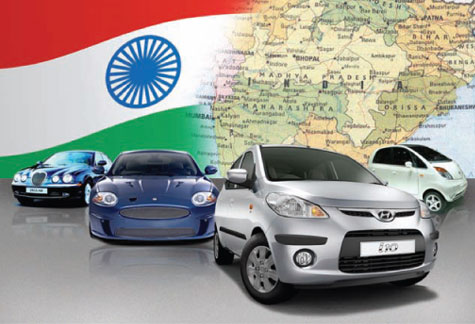
India’s automotive industry is one of the successful cases of India’s economic liberalization strategy set into motion since 1991. The industry which was dominated by a few domestic manufacturers was hardly known for any innovations before 1991, but is now one of the fastest growing manufacturing industries not just in India but globally as well. In 2010, India has emerged as the second fastest growing car market in the world next only to China. Sales of two wheelers crossed 10 million units during the year, a first, with all major two-wheeler manufacturers registering high double digit growth. India in 2010 is the largest tractor manufacturer, second largest two-wheeler manufacturer, fifth largest commercial vehicle manufacturer and the eleventh largest car manufacturer in the world.
There are many instances of innovations in the industry, the Tata’s Nano car being one of the celebrated examples of these innovation efforts. All told, it is an industry that is truly successful in introducing a range of new products not just in the domestic market but in the international market as well.

The auto industry consists of two separate industries: (i) The automobile industry; and (ii) The auto components or parts industry. The automobile industry in turn has three sub sectors: (a) two-wheelers; (b) three-wheelers; and (c) four-wheelers (passenger vehicles and commercial vehicles).

Trends in Production
Production of automobile (in numbers) has doubled itself during the period under consideration. Although the rates of growth of output had plummeted, due essentially to the financial crisis, in 2008-09, it has picked up in all categories the very following year and indications are that this high growth rate will be maintained during
2010-11 as well. There are two important findings. First, is that two wheelers account for the lion’s share of production (in numbers) followed by passenger vehicles (cars). So the driving force behind the spectacular growth of the industry is the output of two-wheelers (motor cycles and scooters) and cars. Second, is that, over time, India has become a base for exports of automobiles. Again most of the exports are accounted for by cars. In fact India has become a base for the manufacture of compact cars.
Trends in Exports
Exports too have registered some appreciable increases. Overall about 11 per cent of the total out is exported although the export intensity varies across the various categories ranging from as high as 24 per cent in the case of three-wheelers to as low as 9 per cent in the case of commercial vehicles. Much of the exports, in quantitative terms, is accounted for by cars and motorcycles reflecting their proportinate share in domestic production. What is interesting is that India has now become base for the manufacture and exports of compact cars.
Structure of the Industry
Here I focus only on the vehicle producing sector. This consists of two sets of firms, domestic and affiliates of a large number of MNCs. Although the industry was largely domestic for a long time, MNCs entry to the industry started with the joint venture Maruti Suzuki’s plans to build small compact cars. Gradually over time, a number of MNCs have established their manufacturing activities in the country. Maruti itself has diluted its domestic equity held by the union government in favour of a larger shareholding by its parent firm. Over time and especially since 1991, there has been entry to the industry by a large number of MNCs. MNCs are focusing much more on passenger cars and motorcycles, while the domestic firms have their presence across
the entire spectrum of vehicles. In terms of total sales the industry is roughly divided between the two the segments although on an average over the last decade or so, the domestic firms have a slightly higher share , as the two large commercial vehicle firms are in the domestic sector.
But on the export front, the foreign firms have not only a higher level but also higher export intensity as well (on an average two times). This shows that the MNCs are actually using India as a base for their exports.
Monday, 29 August 2011
Understanding the reasons behind Disruptive Innovation

I focus mostly on the disruptive innovations in the technology space ( in keeping with my editorial policy) , and talk about my understanding of the underlying reasons for disruptive innovations seen in the world over the last few years.
The term ‘disruptive innovation’ has been used to describe innovation that is of highly revolutionary or discontinuous nature, in which customers and consumers embrace new paradigms in favour of the old. To begin to understand disruptive innovation it is useful to consider some examples such as the light-bulb industry’s disruption of the candle industry and the desktop computer industry’s disruption of the mainframe and minicomputer computer industries.That firms need to periodically engage in the process of revolutionary or disruptive innovation for long-term survival is well-recognised. Many companies can and do spend heavily on technology development and market research, however, almost all investment is devoted to evolutionary innovations that make current offerings perform better in ways customers already value. Few organisations understand or have established track records for undertaking successful disruptive innovation, in fact most are reluctant to follow this path and find themselves disadvantaged by embedded structures, capabilities and outlooks. The desire to maintain a stable and efficient context to satisfy mainstream market demands, forces many organisations into a focus on the ‘familiar’, the ‘mature’ and the ‘proximate’. Thus most organisations fall into learning traps preventing them from ‘exploring’ potentially disruptive ideas .
If an organisation manages to foster a potentially disruptive idea, not only does it often face huge problems getting internal support but there are massive obstacles to overcome to get it adopted by the mass market.
New paradigms represent discontinuities in trajectories of progress as defined within earlier paradigms - where a technological paradigm is a pattern of solutions for selected technological problems . In fact, new paradigms redefine the future meaning of progress and a new class of problems becomes the target of normal incremental innovation. Thus for a discontinuous innovation to be disruptive, successful exploitation is vital, which, results in significant transformation of the mainstream market and its value proposition.
The extent of disruption that major breakthroughs cause can be broken down into subgroups of ‘product’ and ‘process’, furthermore, these can be either ‘competence destroying’ or ‘competence-enhancing’. Competencedestroying discontinuities are highly disruptive, requiring new skills, abilities and knowledge, are initiated by new entrants – or spin-off companies. They increase environmental turbulence and market uncertainty, usually delivering a new product class, a significant product substitute or a radical new way of making a product. Alternatively, competence-enhancing discontinuities “represent an order-of-magnitude improvement over prior products, yet build on existing know-how”. They are associated with little or even decreased environmental turbulence and reduced market uncertainty. Thus, disruptive innovation occurs in both products and processes and is at the extreme end of the continuum of discontinuous innovation.

The system level is where the real benefits of ‘non-linear’ or disruptive innovation can be found. He states that organisations can disruptively innovate with products or services but the real value is only unlocked when the larger system is factored into the disruption. By unpacking the ‘business model’ and exposing it to disruptive thinking, Hamel states that ‘Business Concept Innovation’ occurs and that this is the real essence of revolutionary innovation, causing disruption to preconceived ideas, markets and entire value networks.
Thus, revolutionary innovations fall onto a continuum ranging from ‘radical incrementalism’ – that delivers significant change to the mainstream customer which, is mostly competence enhancing with low environmental turbulence and low market uncertainty - to ‘disruptive innovations’ – that deliver transformational change to the mainstream market and its value attributes which, are mostly competence destroying with high environmental turbulence and high market uncertainty.
Friday, 26 August 2011
How is Innovation in Computer industry different?

The PC industry has introduced many innovations in its 25 year history. Product innovation includes the creation of new product categories such as notebook PCs and PDAs, as well as the creation of new product platforms such as multimedia PCs and wireless “mobility” notebooks. The scope and outcome of product innovation in PCs is shaped by the presence of global architectural standards set originally by IBM and now
largely controlled by Microsoft and Intel. Common interface standards enable innovators to reach a global market with standard product lines; thus economies of scale can be achieved to support investments in product development and manufacturing capacity. This is different from industries such as mobile phones or video games, in which multiple incompatible standards exist. An example of the benefits of standardization is the acceptance of 802.11 as a common standard which spurred the introduction of wireless networking as a standard feature on notebook PCs. On the other hand, standardization battles can constrain innovation as PC makers are reluctant to incorporate technologies before a standard is set, as is the case with second generation DVD technology.
When PC makers do innovate, they face hard choices in trying to capture profits from their innovations. One alternative is to incorporate the innovation only in their own products to differentiate their PCs from those of competitors, but there is a question of whether they can convince customers to pay for the differentiation and also whether customers will want to adopt a non-standard technology. Another is to license the technology broadly, which might bring in license fees and even establish the technology as an industry standard, but will eliminate product differentiation.
Despite these challenges, which may discourage radical innovation, PC makers are pushed to incremental innovation by component makers who introduce frequent changes in their products (faster speed, greater capacity, smaller form factor, longer life) in efforts to gain greater market share within their industry sector such as semiconductors, storage or power supply. PC makers feel they have to adopt these changes rather than risk being left behind by a competitor that does adopt. One PC maker expressed the view that it would be better for everyone if the pace of innovation were slower, but no one is willing to take the risk of such a slowdown. Thus, competition and innovation in the supply chain tends to push PC makers into incremental changes that do little to differentiate products.
As a result, PC makers have tended to concentrate on operational efficiency, marketing, and distribution, rather than trying to use product differentiation as a source of sustainable competitive advantage. Product innovation at the system level tends to be incremental and emphasizes developing slightly different products for
narrowly defined market niches, such as PC gamers who demand high performance or business travelers who desire ultra-light notebooks, rather than more distinctively innovative products. Instead, most product innovation occurs upstream in components and software, which are then incorporated by PC makers.
Subscribe to:
Comments (Atom)